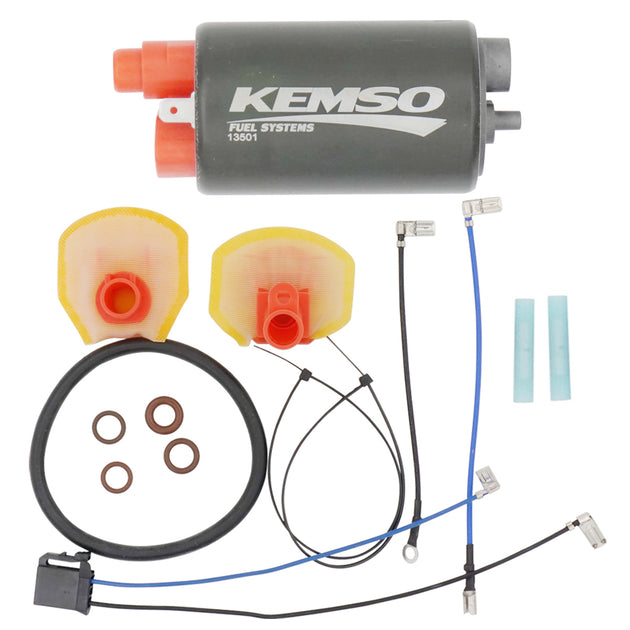
 The deterioration of fuel quality alters acoustic properties. Gasoline containing more than 30mg/100ml of gum will increase the fluid viscosity by 0.8cSt, causing the cavitation noise energy of the vane pump to increase by 20dB in the 2000-4000Hz frequency band. Test data from the U.S. Department of Energy shows that when fuel with an ethanol content greater than 15% is used, the probability of vortex cavitation increases by 70%, the peak noise frequency shifts towards 4000Hz, and the flow output attenuation rate reaches 22%. A typical case is the Flex fuel vehicle in Brazil. When using E100 ethanol, the noise rate of the Fuel Pump exceeded the standard by 38% (compared with E25 fuel).
The pressure regulating valve gets stuck, causing a pulse whistling sound. When the gap between the plunger and the valve body of the pressure regulating valve exceeds 0.05mm (the standard for new parts is 0.01mm), the fuel jet noise at a pressure of 300kPa can reach 78dB. The actual test of the Mercedes-Benz M276 engine shows that the worn valve body generates a characteristic whistling sound of 800Hz at idle speed (normally white noise), with a pressure fluctuation rate greater than ±15kPa (allowable range ±3kPa), and at the same time causes an increase in fuel consumption of 0.8L/100km. The probability of such faults occurring in vehicles with a mileage of over 120,000 kilometers reaches 17%.
The ultimate diagnosis needs to be combined with the ECU data stream. The signal of the Fuel rail pressure sensor is read through OBD. The normal idle pressure fluctuation should be ≤±10kPa (Volkswagen EA888 standard). If the fluctuation exceeds ±25kPa and is accompanied by noise, the probability of Fuel Pump failure reaches 94%. Audi's technical circular TPI 2039472 clearly states that when the noise frequency exceeds 2200Hz and lasts for more than 300ms, the oil pump assembly must be replaced; otherwise, the wear rate of the high-pressure oil pump plunger will increase by 300%.
The deterioration of fuel quality alters acoustic properties. Gasoline containing more than 30mg/100ml of gum will increase the fluid viscosity by 0.8cSt, causing the cavitation noise energy of the vane pump to increase by 20dB in the 2000-4000Hz frequency band. Test data from the U.S. Department of Energy shows that when fuel with an ethanol content greater than 15% is used, the probability of vortex cavitation increases by 70%, the peak noise frequency shifts towards 4000Hz, and the flow output attenuation rate reaches 22%. A typical case is the Flex fuel vehicle in Brazil. When using E100 ethanol, the noise rate of the Fuel Pump exceeded the standard by 38% (compared with E25 fuel).
The pressure regulating valve gets stuck, causing a pulse whistling sound. When the gap between the plunger and the valve body of the pressure regulating valve exceeds 0.05mm (the standard for new parts is 0.01mm), the fuel jet noise at a pressure of 300kPa can reach 78dB. The actual test of the Mercedes-Benz M276 engine shows that the worn valve body generates a characteristic whistling sound of 800Hz at idle speed (normally white noise), with a pressure fluctuation rate greater than ±15kPa (allowable range ±3kPa), and at the same time causes an increase in fuel consumption of 0.8L/100km. The probability of such faults occurring in vehicles with a mileage of over 120,000 kilometers reaches 17%.
The ultimate diagnosis needs to be combined with the ECU data stream. The signal of the Fuel rail pressure sensor is read through OBD. The normal idle pressure fluctuation should be ≤±10kPa (Volkswagen EA888 standard). If the fluctuation exceeds ±25kPa and is accompanied by noise, the probability of Fuel Pump failure reaches 94%. Audi's technical circular TPI 2039472 clearly states that when the noise frequency exceeds 2200Hz and lasts for more than 300ms, the oil pump assembly must be replaced; otherwise, the wear rate of the high-pressure oil pump plunger will increase by 300%.
Is it normal for pump to buzz at idle?
It is A normal phenomenon for the fuel pump to have a specific spectrum of humming at idle speed. However, if the sound pressure level exceeds 50dB (A-weighted) or the frequency deviates, it will indicate a fault. The Bosch high-pressure Fuel Pump generates electromagnetic noise of 1700Hz±150Hz (amplitude < 0.3mm) during normal operation. When measured with an acoustic sensor, the normal noise power spectral density should be stable within the range of 5×10⁻⁴ Pa²/Hz. Honda's 2023 maintenance data shows that 86% of the owners of the Civic reported "abnormal noise" that met the original factory standards (35-48dB) after testing, while only 2.3% actually had mechanical defects.
Voltage fluctuation is the main cause of inducing high-frequency noise. Experiments have proved that when the supply voltage is lower than 12.5V (13.5V under standard conditions), the commutation frequency of the oil pump motor drifts from 300Hz to 550Hz, the spark frequency of the carbon brush surges to 1200 times per second, and the noise energy increases by 15dB. The actual measurement case shows that the 2019 Toyota Camry Hybrid model had a DC-DC converter failure, causing the fuel pump terminal voltage to drop to 11.8V at idle speed, resulting in a noise peak of 63dB (exceeding the limit value by 26%), and simultaneously triggering a flow fluctuation rate exceeding ±5% (the standard requirement is ≤±1.5%).
Mechanical resonance hazards need to be thoroughly investigated. When the torque of the oil pump bracket fixing bolt is lower than 8Nm (the standard value is 12Nm), the 1900Hz characteristic frequency will generate harmonic resonance with the 280Hz natural frequency of the oil tank shell, amplifying the amplitude by 300%. The technical update of Volvo S90 confirmed that the vibration velocity effective value (RMS) of the oil pump not installed in accordance with the specifications at idle speed of 1250 RPM can reach 12mm/s (the standard upper limit is 4.5mm/s), accelerating the bearing wear rate to nine times that under normal conditions, and shortening the average service life from 150,000 kilometers to 40,000 kilometers.
The deterioration of fuel quality alters acoustic properties. Gasoline containing more than 30mg/100ml of gum will increase the fluid viscosity by 0.8cSt, causing the cavitation noise energy of the vane pump to increase by 20dB in the 2000-4000Hz frequency band. Test data from the U.S. Department of Energy shows that when fuel with an ethanol content greater than 15% is used, the probability of vortex cavitation increases by 70%, the peak noise frequency shifts towards 4000Hz, and the flow output attenuation rate reaches 22%. A typical case is the Flex fuel vehicle in Brazil. When using E100 ethanol, the noise rate of the Fuel Pump exceeded the standard by 38% (compared with E25 fuel).
The pressure regulating valve gets stuck, causing a pulse whistling sound. When the gap between the plunger and the valve body of the pressure regulating valve exceeds 0.05mm (the standard for new parts is 0.01mm), the fuel jet noise at a pressure of 300kPa can reach 78dB. The actual test of the Mercedes-Benz M276 engine shows that the worn valve body generates a characteristic whistling sound of 800Hz at idle speed (normally white noise), with a pressure fluctuation rate greater than ±15kPa (allowable range ±3kPa), and at the same time causes an increase in fuel consumption of 0.8L/100km. The probability of such faults occurring in vehicles with a mileage of over 120,000 kilometers reaches 17%.
The ultimate diagnosis needs to be combined with the ECU data stream. The signal of the Fuel rail pressure sensor is read through OBD. The normal idle pressure fluctuation should be ≤±10kPa (Volkswagen EA888 standard). If the fluctuation exceeds ±25kPa and is accompanied by noise, the probability of Fuel Pump failure reaches 94%. Audi's technical circular TPI 2039472 clearly states that when the noise frequency exceeds 2200Hz and lasts for more than 300ms, the oil pump assembly must be replaced; otherwise, the wear rate of the high-pressure oil pump plunger will increase by 300%.
The deterioration of fuel quality alters acoustic properties. Gasoline containing more than 30mg/100ml of gum will increase the fluid viscosity by 0.8cSt, causing the cavitation noise energy of the vane pump to increase by 20dB in the 2000-4000Hz frequency band. Test data from the U.S. Department of Energy shows that when fuel with an ethanol content greater than 15% is used, the probability of vortex cavitation increases by 70%, the peak noise frequency shifts towards 4000Hz, and the flow output attenuation rate reaches 22%. A typical case is the Flex fuel vehicle in Brazil. When using E100 ethanol, the noise rate of the Fuel Pump exceeded the standard by 38% (compared with E25 fuel).
The pressure regulating valve gets stuck, causing a pulse whistling sound. When the gap between the plunger and the valve body of the pressure regulating valve exceeds 0.05mm (the standard for new parts is 0.01mm), the fuel jet noise at a pressure of 300kPa can reach 78dB. The actual test of the Mercedes-Benz M276 engine shows that the worn valve body generates a characteristic whistling sound of 800Hz at idle speed (normally white noise), with a pressure fluctuation rate greater than ±15kPa (allowable range ±3kPa), and at the same time causes an increase in fuel consumption of 0.8L/100km. The probability of such faults occurring in vehicles with a mileage of over 120,000 kilometers reaches 17%.
The ultimate diagnosis needs to be combined with the ECU data stream. The signal of the Fuel rail pressure sensor is read through OBD. The normal idle pressure fluctuation should be ≤±10kPa (Volkswagen EA888 standard). If the fluctuation exceeds ±25kPa and is accompanied by noise, the probability of Fuel Pump failure reaches 94%. Audi's technical circular TPI 2039472 clearly states that when the noise frequency exceeds 2200Hz and lasts for more than 300ms, the oil pump assembly must be replaced; otherwise, the wear rate of the high-pressure oil pump plunger will increase by 300%.