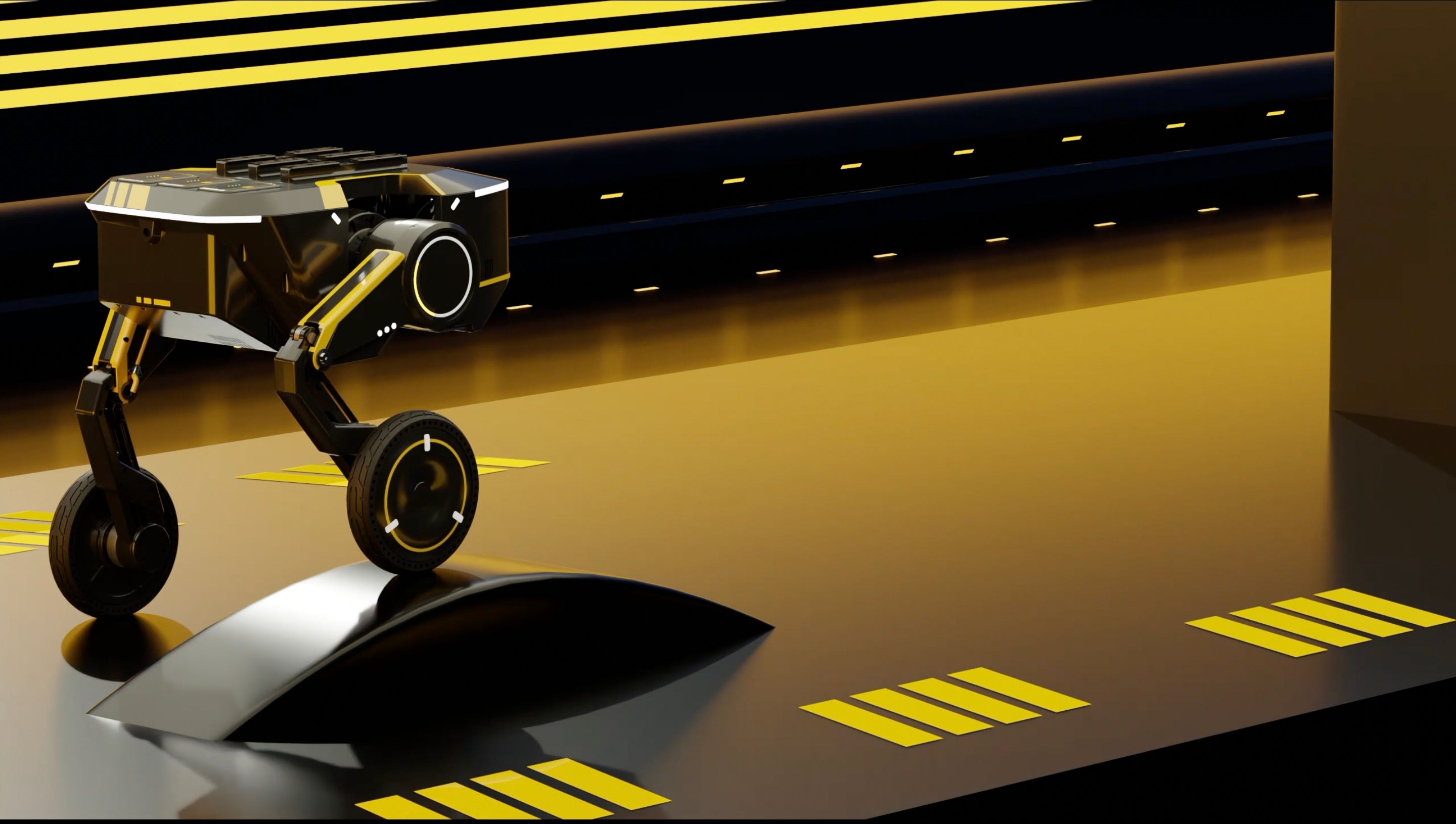
Robot payload, speed, and obstacle-crossing specifications describe how much weight a robot can carry, how fast it can move under certain conditions, and what terrain it can handle. A 100 kg payload rating does not always mean 100 kg during continuous movement. Engineers usually evaluate payload, speed, wheel design, ground clearance, slope ability, and battery performance together. For example, a warehouse robot may operate at 1–2 m/s with 100 kg loads, while outdoor platforms may prioritize 20°–40° slope climbing and larger wheel systems.
Robot Payload Ratings and Real Working Capacity
Payload refers to the additional weight a robot can transport besides its own structure, battery, sensors, and electronics. Manufacturers usually provide a rated payload based on controlled tests, but the real operating capacity depends on movement speed, acceleration, terrain, and load position.
A robot listed with a 100 kg payload may support:
| Payload Type | Typical Condition |
|---|---|
| Static payload | Robot remains stationary |
| Dynamic payload | Robot moves with the load |
| Maximum payload | Short-term tested limit |
| Recommended payload | Long-term operation range |
For industrial robots, dynamic payload is normally lower than static capacity. A mobile platform carrying 100 kg while moving at 0.5 m/s may not maintain the same performance at 2 m/s because motors require more torque and the braking distance increases.
A 2024 mobile robotics study from multiple warehouse deployments showed that reducing payload from the maximum rating by around 20%–30% often improved battery endurance and mechanical reliability during long operating cycles.
A practical payload specification should answer three questions: how much weight is carried, how far the load is positioned from the robot center, and how frequently the robot moves.
The load position changes robot performance as much as the total weight. A 40 kg container placed close to the chassis creates less mechanical stress than a 25 kg object mounted on a long extension arm.
This is especially important for mobile manipulation platforms. When a robotic arm extends outward, the distance between the load and the robot base increases the force applied to the structure. A robot arm rated for 10 kg near the base may only handle 3–5 kg when fully extended.
Payload Distribution Affects Stability and Movement
Weight distribution determines how efficiently wheels or tracks maintain contact with the ground. Poorly positioned loads can reduce traction, increase wheel slip, and affect navigation accuracy.
For four-wheel mobile robots, engineers often aim for balanced wheel loading. Uneven distribution may cause:
-
Different wheel wear rates
-
Reduced climbing ability
-
Higher motor temperature
-
Less accurate movement
A robot carrying materials in factories may complete hundreds or thousands of movements per day. In a logistics environment operating 8–16 hours daily, small mechanical differences can become important over months of operation.
Payload also changes energy consumption. A heavier robot requires more current from the motors during acceleration and climbing. Some autonomous platforms report 15%–40% shorter operating time when moving near maximum payload compared with unloaded operation.
The relationship between payload and energy use leads to another important specification: speed under load.
Maximum Speed vs Operating Speed
Robot manufacturers often publish maximum speed, but this number usually represents the highest possible velocity under specific test conditions.
A robot with a rated speed of 3 m/s may normally operate at:
| Environment | Operating Speed |
|---|---|
| Open warehouse aisle | 1.5–3 m/s |
| Near workers | 0.3–1 m/s |
| Loading area | 0.2–0.5 m/s |
| Uneven outdoor terrain | 0.5–2 m/s |
Autonomous robots adjust speed based on sensors, navigation software, and safety settings. LiDAR, cameras, and proximity sensors can reduce movement speed when objects are detected nearby.
Speed performance also changes with payload. A robot carrying 80 kg may reach a lower speed than the same platform without cargo because acceleration requires more motor power.
For example:
| Payload | Possible Operating Speed |
|---|---|
| Empty platform | 2.5 m/s |
| 50% rated load | 2 m/s |
| Maximum load | 1–1.5 m/s |
The difference between maximum speed and useful working speed becomes more noticeable in environments requiring frequent stopping and turning.
Acceleration and Braking Performance
Maximum speed alone does not determine productivity. Acceleration, turning ability, and stopping distance affect how efficiently a robot completes repeated tasks.
A warehouse robot traveling only 100 meters may stop and restart dozens of times. A platform with moderate speed but faster acceleration can complete routes faster than a robot with a higher top speed but slower movement changes.
Important motion specifications include:
| Specification | Application Impact |
|---|---|
| Maximum speed | Long straight movement |
| Acceleration rate | Frequent starts |
| Braking distance | Safety and positioning |
| Turning speed | Narrow spaces |
| Climbing speed | Sloped terrain |
When payload increases, braking distance also increases because the moving mass becomes larger. Engineers normally test robots under different load conditions instead of measuring performance only without cargo.
A 2023 autonomous vehicle evaluation involving more than 500 navigation cycles found that loaded platforms required noticeably longer stopping distances compared with unloaded platforms, especially on low-friction surfaces.
Understanding Obstacle-Crossing Capability
Obstacle-crossing specifications describe how a robot handles uneven surfaces, small steps, gaps, ramps, and terrain changes.
Common specifications include:
-
Ground clearance
-
Maximum obstacle height
-
Maximum gap width
-
Slope angle
-
Wheel diameter
-
Suspension travel
Indoor robots usually focus on smooth floors, while outdoor robots require stronger mechanical structures.
Typical obstacle specifications:
| Robot Type | Ground Clearance | Terrain Capability |
|---|---|---|
| Indoor AMR | 10–50 mm | Flat floors |
| Industrial mobile robot | 50–150 mm | Ramps and uneven surfaces |
| Outdoor inspection robot | 100–300 mm | Rough terrain |
Ground clearance determines whether the robot body contacts the surface when crossing small objects. A robot with 20 mm clearance may work well on factory floors but struggle with outdoor gravel or uneven pavement.
The wheel system determines how effectively the robot uses this clearance.
Wheel Design and Terrain Performance
Wheel selection changes robot capability significantly. Different designs are optimized for different environments.
Standard wheels provide efficient movement on smooth surfaces. They are common in warehouses, laboratories, and manufacturing facilities.
Advantages:
-
Lower energy consumption
-
Simple maintenance
-
Higher indoor efficiency
Limitations:
-
Limited terrain ability
-
Reduced performance on loose surfaces
-
Lower obstacle height capability
Tracked robots provide stronger surface contact and are often used where terrain conditions change frequently.
Advantages:
-
Better traction
-
Improved slope climbing
-
More stable outdoor movement
Limitations:
-
Higher power consumption
-
Lower speed efficiency on smooth floors
Some research platforms combine wheels and legs to improve terrain adaptability. These systems, including wheeled leg robot platforms for research, are designed to combine efficient rolling movement with the ability to handle uneven environments.
Slope Climbing Capability
Slope rating shows the maximum incline a robot can climb under specified conditions.
Typical ranges:
| Application | Slope Capability |
|---|---|
| Indoor transport robots | 3°–10° |
| Industrial outdoor robots | 10°–25° |
| Rough terrain platforms | 25°–45° |
Slope performance depends on more than motor power. Important factors include:
-
Robot weight
-
Tire material
-
Payload amount
-
Surface friction
-
Battery condition
A robot that climbs a 30° slope without cargo may not achieve the same angle with maximum payload. Additional weight increases wheel pressure but also requires more torque.
Outdoor inspection robots often use larger wheels, suspension systems, and higher torque motors because their working environments may include grass, gravel, construction areas, and uneven paths.
How Engineers Compare Robot Specifications
A complete robot evaluation usually combines multiple specifications rather than checking one number.
| Requirement | Specifications To Review |
|---|---|
| Transporting materials | Dynamic payload, load position |
| Long-distance operation | Battery capacity, speed under load |
| Outdoor use | Ground clearance, slope rating |
| Uneven terrain | Wheel system, suspension |
| Human environments | Safety speed limits |
| Continuous operation | Motor temperature, durability |
A logistics robot may prioritize payload accuracy and battery efficiency, while an inspection robot may prioritize terrain capability and environmental protection.
The correct specifications depend on where the robot works and how frequently it operates.
Common Specification Mistakes
Many buyers compare robots by maximum values only, but real performance depends on operating conditions.
A robot with higher payload is not always better if it requires larger batteries, heavier structures, or slower movement.
A robot with higher speed is not always faster in daily tasks if it must reduce speed frequently for safety reasons.
A robot with stronger obstacle-crossing ability may also require more maintenance because complex mechanical systems contain more moving parts.
The most useful specification sheet is one that matches the robot’s daily working conditions, not only the highest number listed by the manufacturer.
Selecting Robot Specifications for Different Applications
Warehouse robots usually require:
-
High repeatability
-
Accurate positioning
-
Efficient battery use
-
Moderate obstacle capability
Outdoor robots usually require:
-
Larger wheels or tracks
-
Higher ground clearance
-
Strong weather protection
-
Better slope performance
Research platforms often require:
-
Flexible mechanical design
-
Open software interfaces
-
Adjustable payload options
-
Different mobility modes
Construction and inspection applications usually place more emphasis on:
-
Terrain performance
-
Mechanical protection
-
Long operating time
-
Sensor integration
Robot specifications should always be reviewed according to the environment, load conditions, and expected operating schedule. A platform designed for flat indoor transport will have different engineering priorities from one designed for outdoor mobility, even if both are classified as mobile robots.